
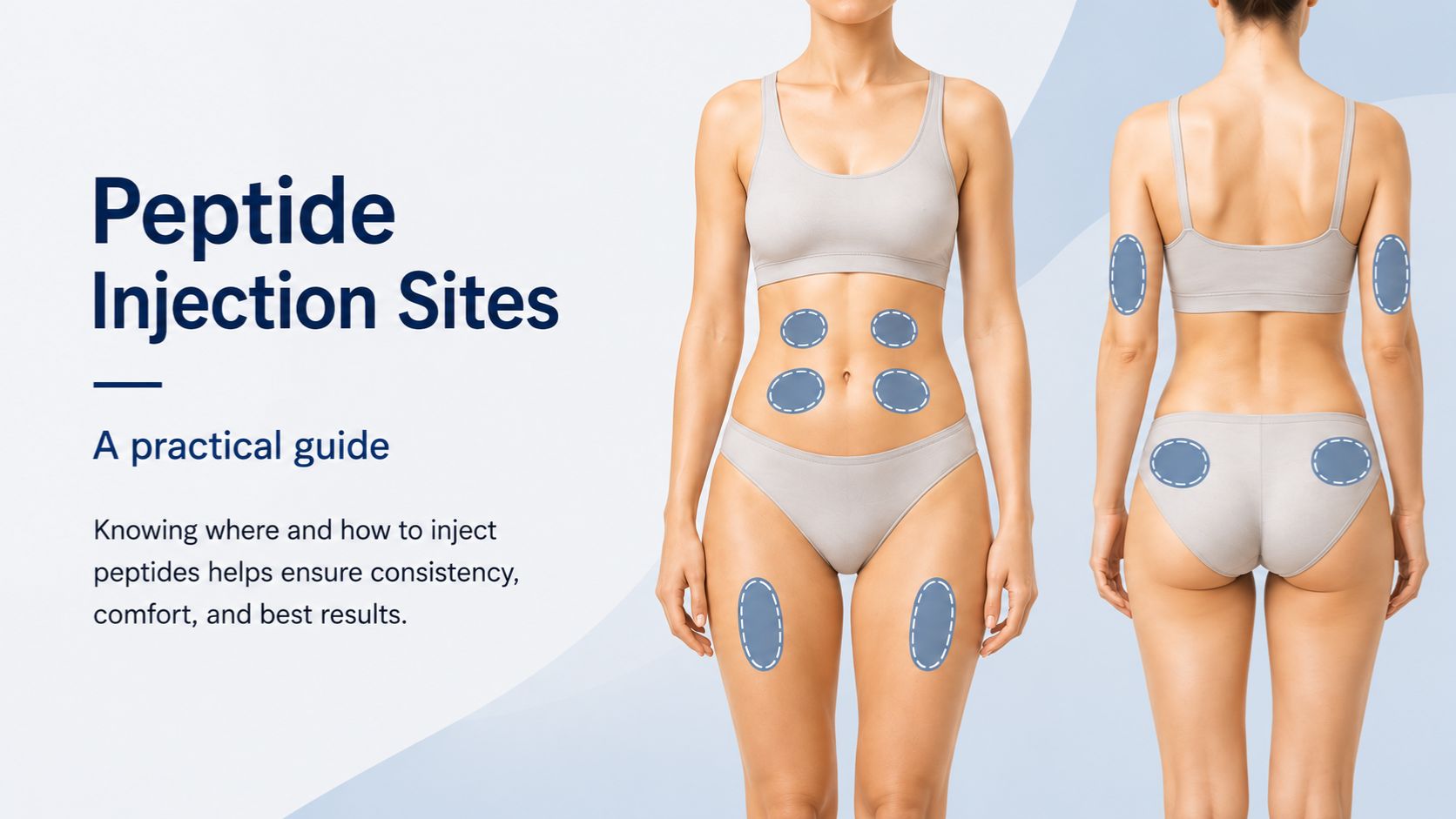
One of the most common questions people ask when starting peptide therapy is simple: Where exactly can you inject it?
For most subcutaneous peptide protocols using a pen system, the answer is straightforward. The goal is to use areas with enough fatty tissue under the skin for comfortable delivery, rather than injecting into muscle. The most commonly used areas are the abdomen, outer thigh, back of the upper arm, and upper buttock or love-handle area.
The key principle is not just where you can inject, but where you can do it consistently, comfortably, and safely.
The main areas used for subcutaneous peptide injections
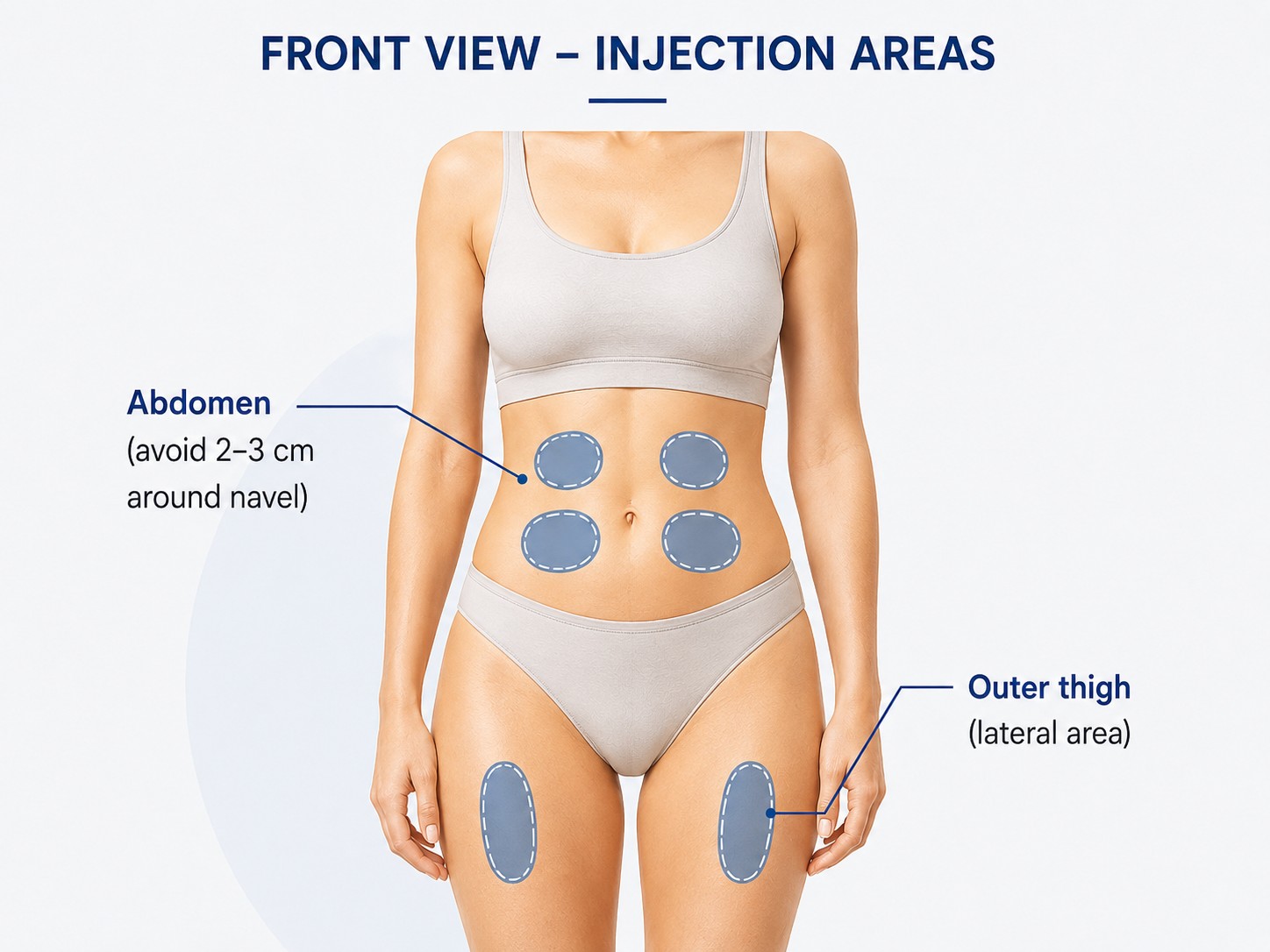
1. Abdomen
For many people, the abdomen is the easiest and most practical option.
It offers:
- a broad surface area
- good access for self-injection
- enough fatty tissue in most adults
- simple rotation from one spot to the next
In general, injections are placed in the fatty area of the stomach, staying away from the belly button itself. A practical rule is to avoid the area immediately around the navel and rotate around the wider abdominal region instead.
2. Outer thigh
The outer upper thigh is another very common injection area.
This works well because it is:
- easy to see
- easy to reach
- practical for self-injection
- often comfortable for people who do not like using the stomach
The important detail is that the outer, fattier part of the thigh is preferred, not the inner thigh. It is also best to stay away from the lower area close to the knee.
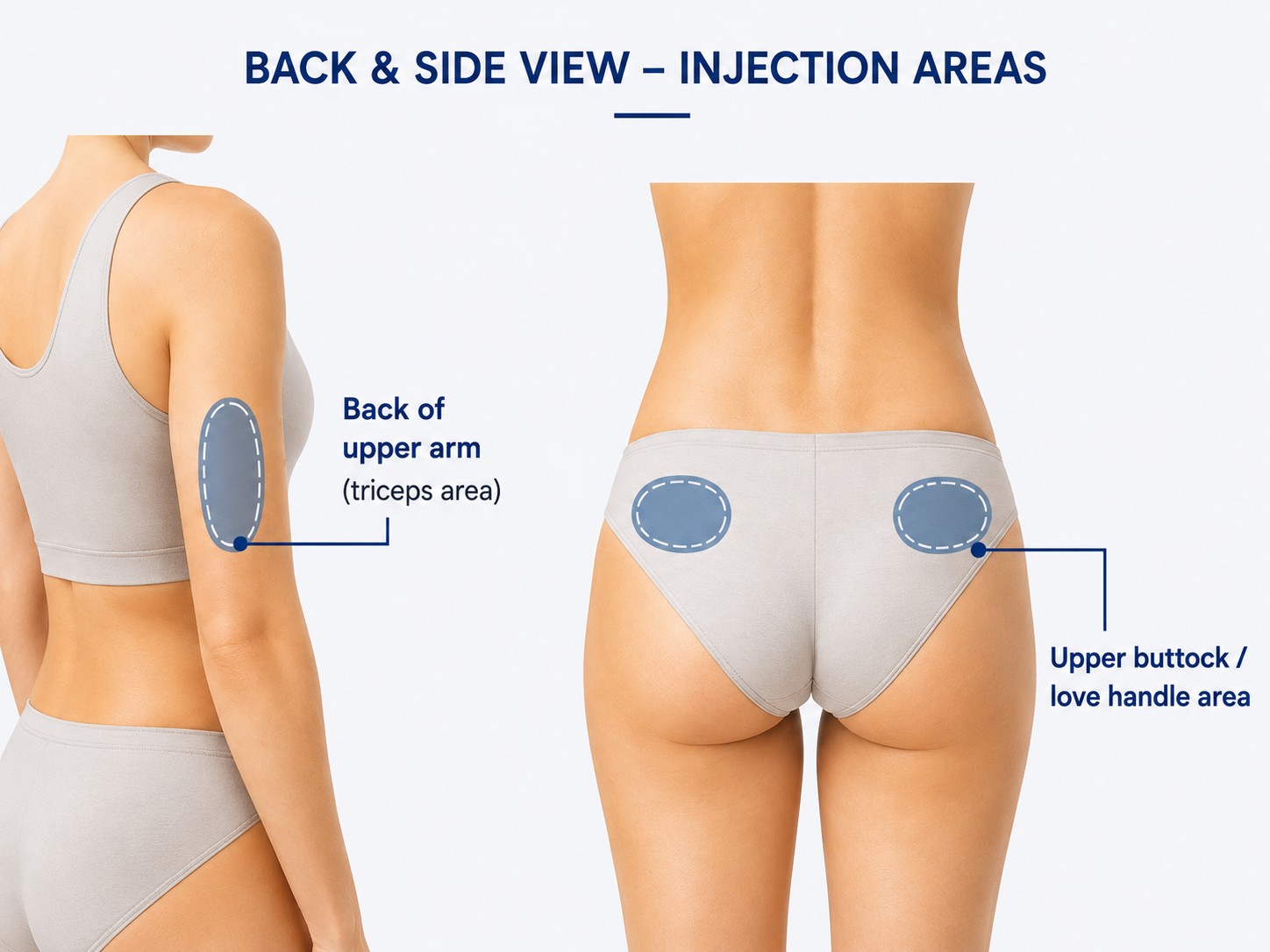
3. Back or outer upper arm
The back or outer upper arm is also a standard subcutaneous injection site.
This area is useful because:
- it has a layer of fatty tissue in many people
- it is commonly used for pen-style injections
- it gives another option for site rotation
The downside is convenience. It can be harder to reach and angle properly on your own, so some people prefer to use it only if someone else is helping, or if they are already comfortable with their technique.
4. Upper buttock or love-handle area
A less commonly used but still valid option is the upper buttock or love-handle region.
This can be useful for:
- people who want an extra rotation site
- those with enough fatty tissue there
- people rotating frequently and wanting more options
The main limitation is practical access. For many people, it is simply less convenient than abdomen or thigh.
The easiest rule: inject into fat, not muscle
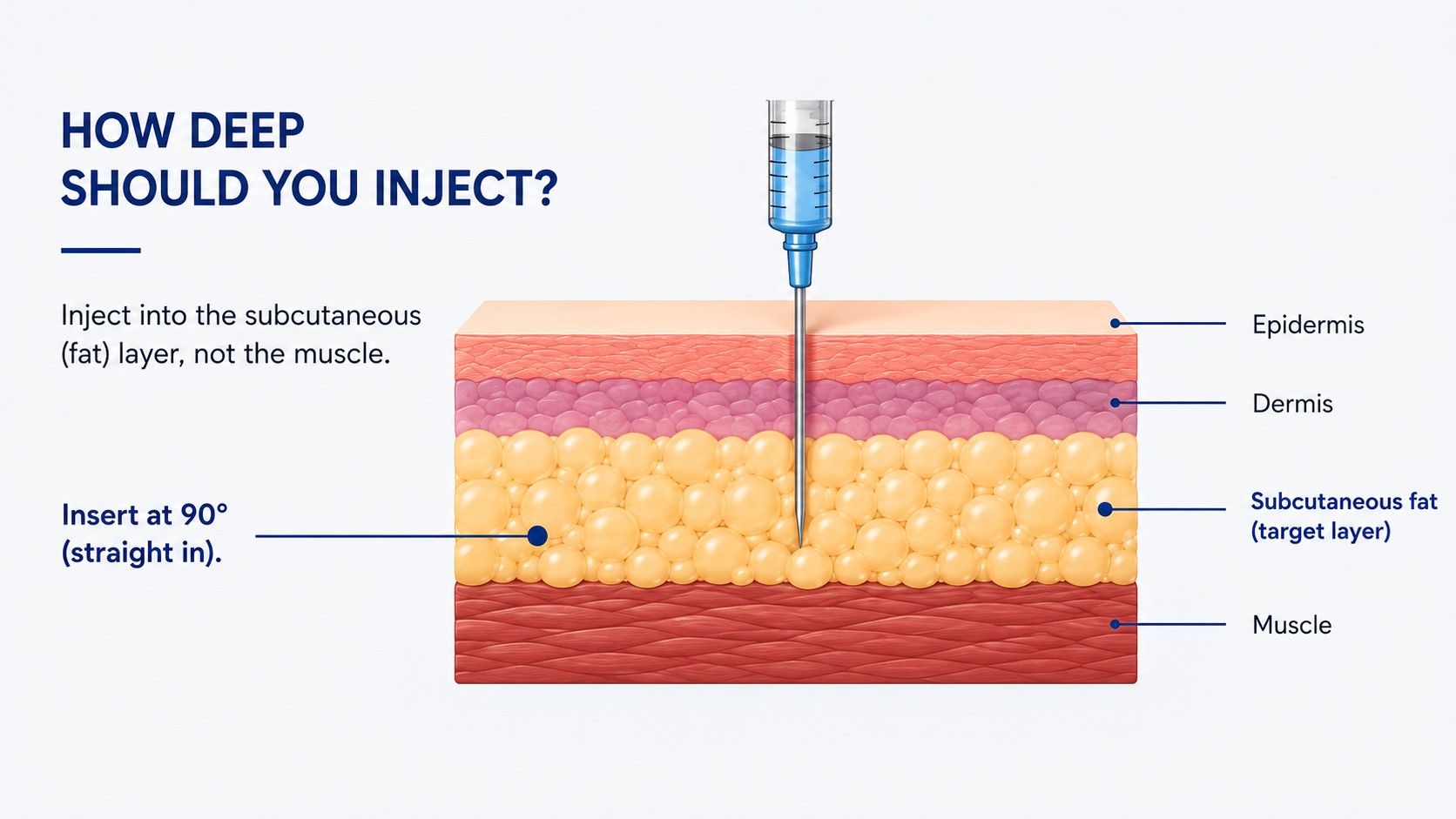
For most peptides used in this setting, the goal is subcutaneous delivery, meaning into the fatty layer just under the skin.
That is why the preferred areas are all places where:
- you can access the tissue easily
- there is enough fat to work with
- you can rotate sites without repeatedly hitting the same exact spot
This is also why some areas are less suitable, even if they look convenient.
Areas to avoid
Even in the right general body area, not every exact spot is a good one.
You should generally avoid injecting into:
- skin that is red, irritated, swollen, or painful
- bruised skin
- scar tissue
- broken skin
- areas with active rash or inflammation
- the exact same point repeatedly
It is also sensible to avoid tattoos, stretch marks, or visibly damaged skin when possible, especially if the area feels irritated or abnormal.
How deep should the injection go?
For subcutaneous peptide use, the aim is the fatty layer beneath the skin, not the muscle underneath it.
This matters because correct depth improves comfort and helps keep the injection in the intended tissue layer.
Why rotation matters
This is one of the most overlooked parts of peptide use.
Even if you prefer one injection site, using the exact same point over and over is not ideal. Repeated injections into one point can increase the chance of:
- local irritation
- lumps or thickened tissue
- poorer comfort
- less predictable absorption over time
That is why site rotation matters. You do not need to jump randomly from stomach to thigh to arm, but you should move around within a site and avoid hitting the exact same point repeatedly.
Which area is best?
There is no single universal answer.
For most people:
- abdomen is the easiest
- outer thigh is the next easiest
- upper arm is useful but less convenient
- upper buttock or love-handle area is optional rather than essential
The best injection area is usually the one that gives you the right balance of comfort, access, enough fatty tissue, easy rotation, and consistent technique.
A practical way to think about it
If you are just starting, the simplest approach is:
- start with the abdomen or outer thigh
- rotate within that region
- add the upper arm or upper buttock later if you want more rotation options
That keeps things easy and helps build confidence.
Summary
For most subcutaneous peptide protocols, the main injection areas are:
- abdomen
- outer upper thigh
- back or outer upper arm
- upper buttock or love-handle area
The goal is to inject into the fatty tissue under the skin, avoid irritated or damaged areas, and rotate sites rather than using the exact same point repeatedly.
Pick an area with enough fatty tissue, keep the technique consistent, and rotate intelligently.


